




Parent notes
A paper bag with something to say
By Carrie 5 min read
Two paper bags, a few crayon marks and one small question can start a story your child gets to shape.
A brown paper bag can become someone who has misplaced a hat, ordered a very large breakfast, or arrived at the wrong house. A few crayon marks are enough to begin.
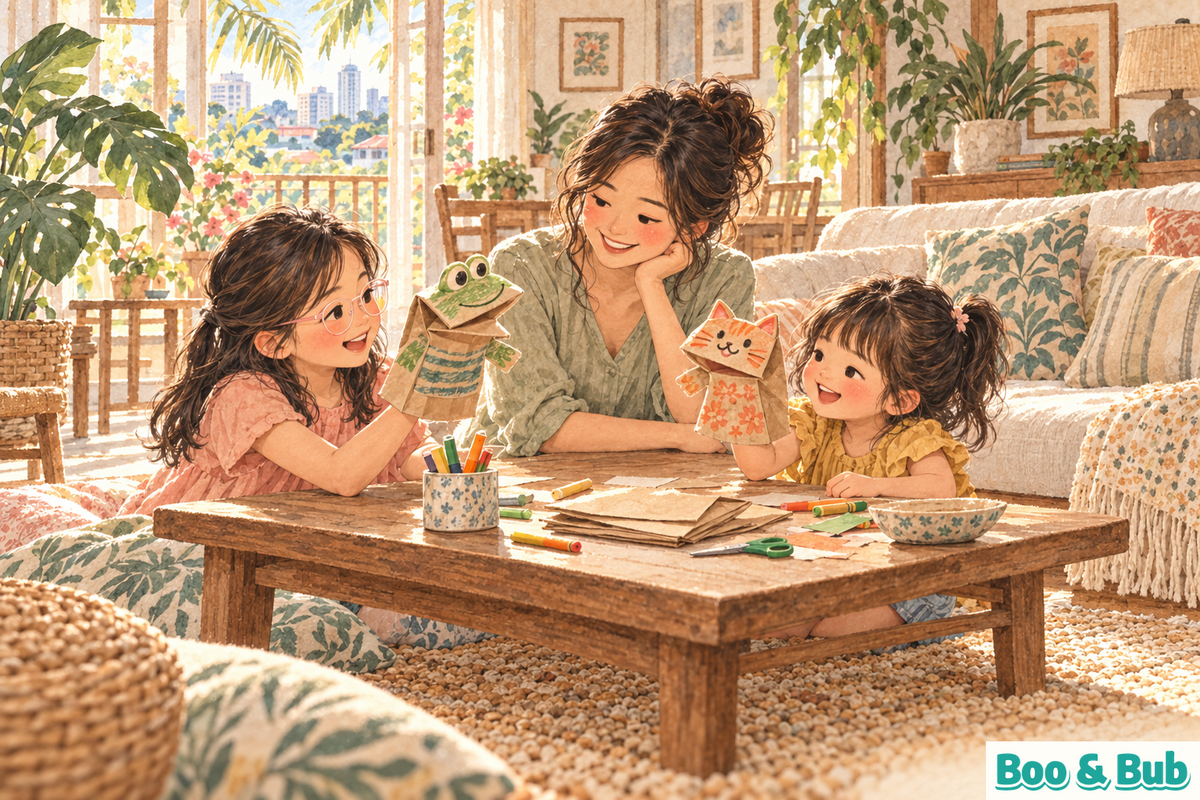
For a small stretch of play at home, try making two simple puppets and letting them meet. You can sit beside your child at the coffee table; there is no need to build a stage or gather an audience.
Start with a face
Choose clean paper lunch bags and crayons. Lay a bag flat with its bottom flap facing up. Your child can draw eyes and a mouth on that flap, then add a body below. A frog or a cat might appear; an entirely invented creature is welcome too.
Let your child choose the character. A crooked smile can stay crooked. Keep the bag open underneath so a hand can slip inside, and try lifting the flap to make the mouth move. Drawing directly on the paper keeps the preparation small.
Give the puppet a face, then leave room for your child to decide who it is.

Offer one small opening
Put on your own puppet and begin with an ordinary problem: "I brought my hat, but now I can't find it." Then pause. Your child might answer in words, point across the room, or move their puppet towards yours.
Wait for their reply. Resist filling every quiet moment with another question. If nothing comes, let your puppet look under a cushion and wonder aloud whether the hat has gone for a walk. The story can be silly and unfinished.
You can use English, Bahasa Malaysia, or whichever language feels comfortable at home. A puppet does not need a special accent. A familiar voice is enough, and switching languages can simply be part of the scene.

Let the play change hands
If a sibling joins, ask which character each person wants to hold. Someone can be the visitor while someone else makes a door from an upright book. There is no fixed script to remember.
One question and a little waiting can be enough for the next part of the story.
A quiet part still counts. Watching the puppets meet, making a small wave, or choosing where they sit can be the whole contribution today. Avoid turning the puppet into a way to quiz a reluctant child.
When interest fades, let the story stop. Leave the bags together on a shelf or flatten them into a folder for another day. What might your child's puppet want to say first?
Sources: PBS KIDS for Parents: paper-bag puppets; Museum of Australian Democracy: hand puppets.