




Parent notes
A simple map of a familiar room
By Carrie 5 min read
Make a small room map with familiar landmarks, a simple key and one short route to follow together.
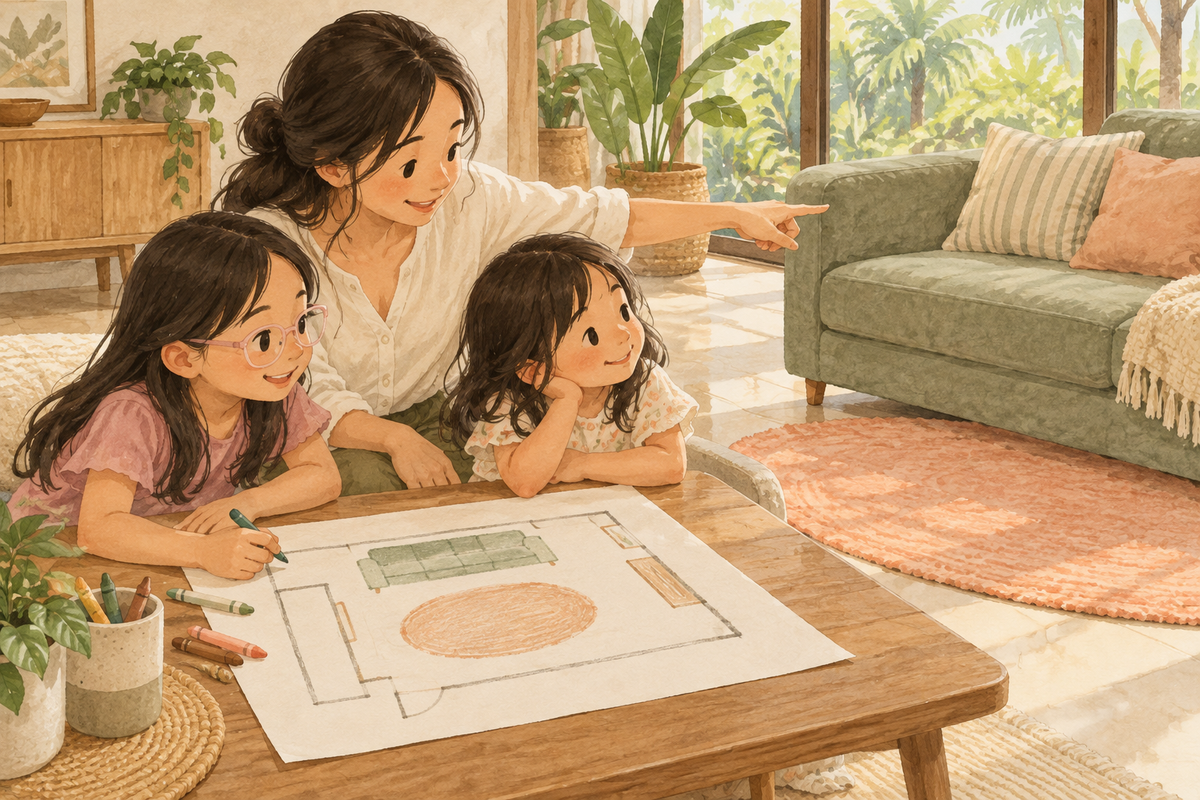
A sofa, a doorway and a rug can become the beginnings of a map. With a sheet of paper, your child can show where familiar things belong, then use those marks to guide you around the room.
For a quiet stretch at home in Malaysia, this is an easy activity to keep small. You need paper, crayons and a little space to walk. Choose a room you can explore together, without stairs or obstacles in the way.
Start with places you can see
Stand at the doorway and look around. Invite your child to choose three things for the map: perhaps the sofa, a low table and the rug. Begin with one room, so you can compare the paper with the real space without going far.
Draw a simple outline together, leaving a gap for the doorway. Imagine looking down at the room from above. If that idea feels tricky, just help place the first shape and point to the object it represents.
Let your child choose how to show each thing. A green rectangle might stand for the sofa; an oval could be the rug. You can draw while they direct, or take turns making marks.
Choose a few familiar places, then match each mark on the paper to something you can see.
Give the marks a meaning
Ask your child to point from one symbol to its real object. Make a tiny map key beside the outline: repeat the green rectangle and add a little sofa picture next to it. Words are optional; you can write a label if your child wants one.
Keep the map facing the same way as the room while you look together. Put the doorway on the paper nearest your starting doorway. This gives you a shared starting point when you try a route.

Let your child guide you
Draw a short line from the doorway to the rug, going around the table. Trace it with a finger first. Then walk that route slowly together, carrying the map where you can both see it.
Use a few helpful words as you move: beside the sofa, around the table, onto the rug. Invite your child to give you the directions. You can pause at each place and find it on the paper again.
Trace a short route on the map, walk it together, and stop to match the paper with the room.

Keep it useful and small
If a shape is in an unexpected place, look at the room together and decide whether to move it. Change the map together; an extra crayon mark is enough.
You can stop after one route, or let another family member try following it. Which familiar place would your child put on a first map? Come and share your small discoveries with the Boo & Bub community.
Sources
- NAEYC: Developing Your Preschooler’s Spatial Thinking — room maps and positional words.
- NAEYC: Fostering Preschool Children’s Spatial Thinking with Books and Movement (27 January 2026) — connecting maps, language and movement.
- PBS KIDS for Parents: Create a Map to Tell a Story — symbols, map keys and sharing a map.