




Parent notes
The story is yours to tell
By Carrie 5 min read
A wordless picture book leaves room for your child's own telling, with a small drawing to keep if they choose.
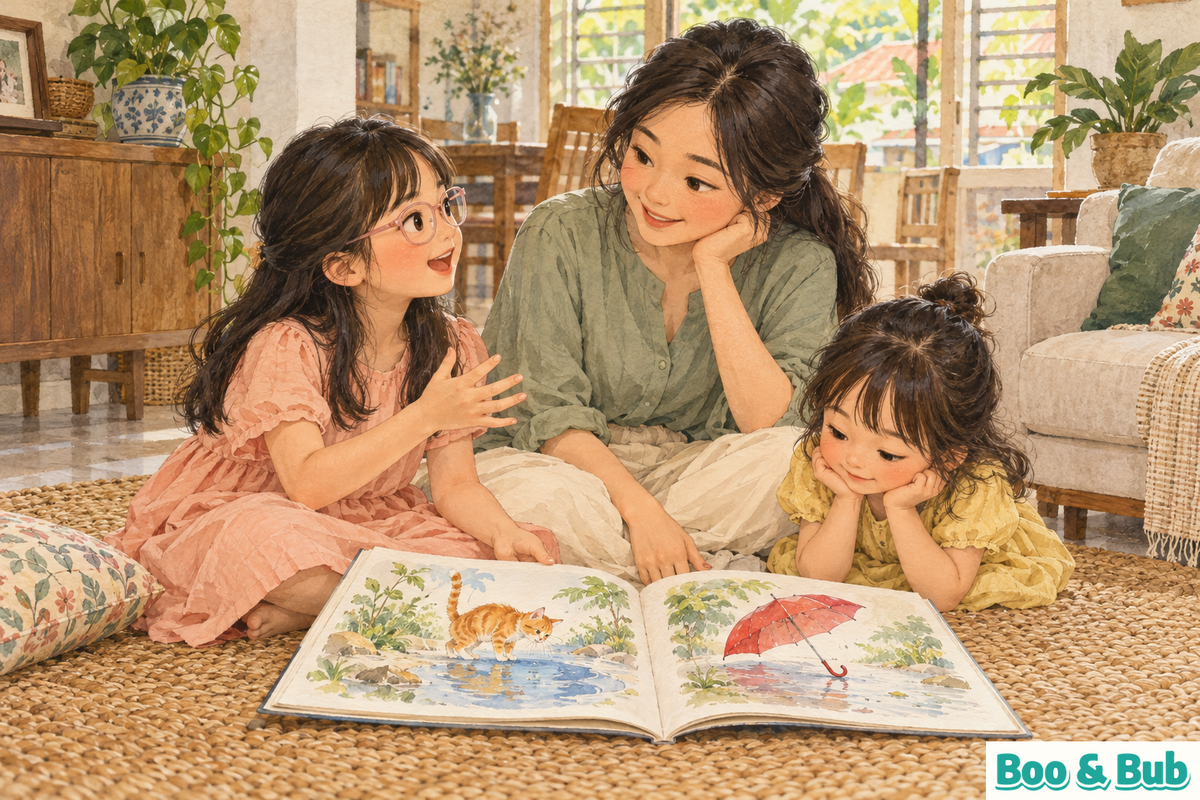
Imagine opening a book to a picture of a cat beside a puddle. Your child says it is waiting for a bus. You thought it was looking for its umbrella. There is room to hear both versions before turning the page.
A wordless picture book has few or no words; its illustrations carry the story. NAEYC describes this in its public introduction to wordless books. You can share one without preparing a performance or finding the perfect sentence.
Look without rushing
Let the picture hold your attention. Reading Rockets suggests browsing the illustrations before trying to tell the story. Follow an interesting detail rather than asking about every object on the page.
Perhaps the cat's feet are wet while its umbrella is dry. You can wonder aloud about that. Then leave some quiet. A child who is still looking has not missed their turn; you do not have to fill every pause.
A pause can leave space for their version.
Offer a beginning, then pause
If your child wants you to start, try one small line about the picture. In our imaginary book, it could be, "The cat has somewhere to go." Reading Rockets recommends modelling a telling before inviting a child's own version.
Listen before adding your next idea. If your child takes the cat to a birthday party, follow that thread. You might ask which detail gave them the idea. Avoid turning a playful conversation into a hunt for the answer you already have in mind.

Keep a piece of their story
NAEYC suggests writing down a child's story and offering crayons for an illustration. If your child wants a record, ask which part they would like to keep. A single scene is enough; you need not recreate the whole book.
Keep their words as their words. A cat travelling on a bus might become a rough drawing with a sentence you write underneath. Read it back and ask whether that is what they meant. Keep this as their separate response, rather than writing in a borrowed book.
Keep the part they want to remember.
Leave room for another telling
Another family member can listen later if your child wants an audience. NAEYC encourages children to share stories with family. Let your child choose whether to show the drawing or simply talk about it.
For a Malaysian household with several home languages, this can stay an informal family conversation, without a translation task. Finish when your child is ready. The cat can catch its imaginary bus another day.

What unexpected story has a picture started in your home? Share the small moment with the Boo & Bub community.
Sources: Reading Rockets: Sharing Wordless Picture Books; NAEYC: Everyone Can Be a Storyteller; NAEYC: Wordless Picture Books (public introduction).