




Parent notes
A little pretend shop at home
By Carrie 5 min read
A small pretend shop, a cloth bag and room for your child's ideas. Simple child-led play for a Malaysian afternoon at home.
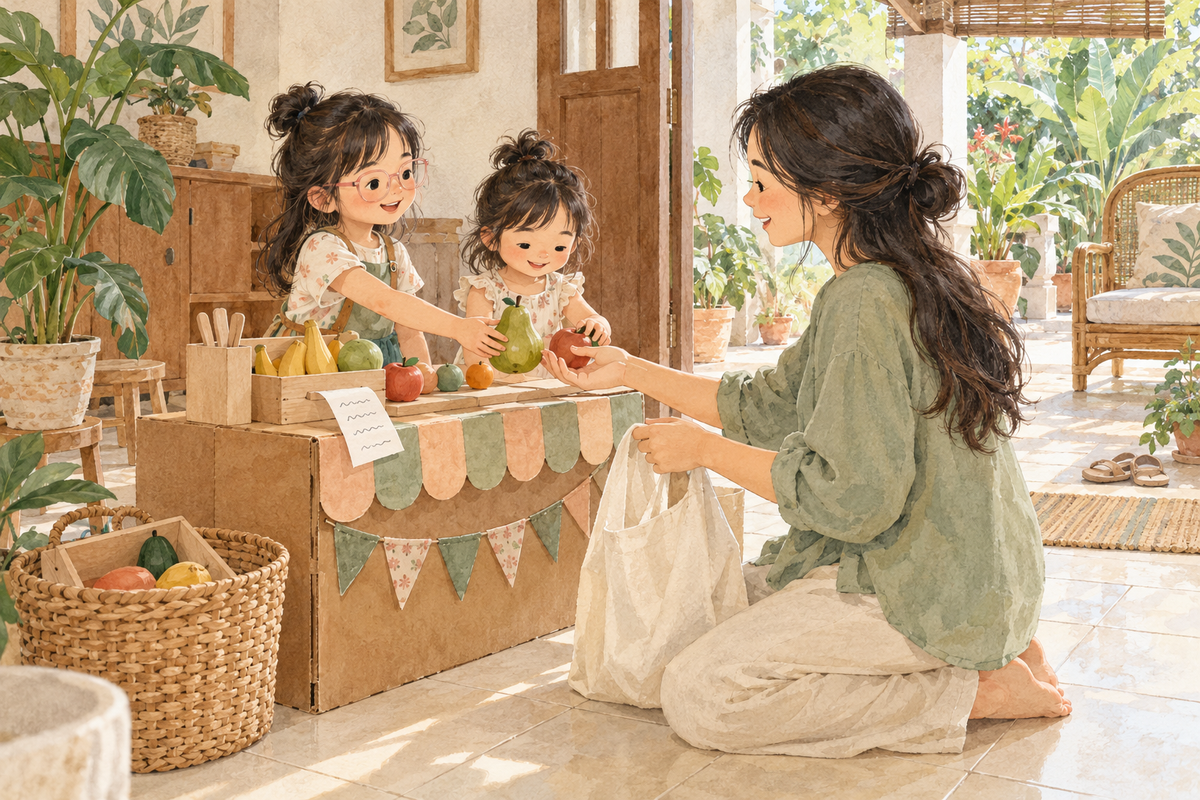
A rainy afternoon does not need a new activity kit. For a preschooler who enjoys pretending, a small shop on the living-room floor can be enough: a place to choose what is for sale and invite someone to visit. There is no need to make it look like a real supermarket.
Start with what is already familiar
Think of a shop your child recognises, perhaps the fruit stall at the pasar or a neighbourhood kedai. Ask, "What would you like your shop to sell?" A fruit shop might become a toy shop halfway through. Let the idea belong to your child.
NAEYC's guidance on meaningful play encourages children's own choices and materials that can be used in different ways. Its home prop-box guide also suggests following children's interests. The little shop below is one practical way to try those ideas, rather than a lesson with a fixed result.
Set out a few props, then leave room for your child's version of the shop.
A counter without a shopping trip
A low table or sturdy box can be the counter. Add a cloth bag and large toy items your child already uses. Paper drawings can stand in for things you do not have. Skip real money and small loose pieces; choose materials appropriate for your child and stay nearby.
For a home with limited space, keep the shop within one clear corner. There is no need to spread every toy across the room. A small setup is enough. If your child wants a sign, offer paper. Scribbles or a picture can be their sign; it does not need neat lettering.
Be a customer, not an examiner
Try a simple opening: "I'd like something for my bag. What do you have today?" Then wait. Your child might name an item, point, or hand you something without speaking. Follow that response instead of filling every pause.
Use the language that feels natural at home. "Berapa?" or "Thank you" can be part of the pretend exchange, without turning it into vocabulary practice. You do not need to quiz them. If they announce that a banana costs a hundred ringgit, you can stay in the story rather than correct the price.
Join the pretend conversation without turning every exchange into a test.
Close the shop gently
When it is time to stop, give a clear heads-up and suggest one last customer. Put the props back in their basket together. Keep the ending simple. The shop can reopen another day, with a different name or completely different stock.
What would your child sell first? Share your little shop idea with other parents in the Boo & Bub community.
Sources and visual reference
NAEYC: Five Essentials to Meaningful Play
NAEYC: 10 Prop Box Ideas
Visual reference: shopping scene by F aint on Unsplash. Reference only; the published illustration is original.