




Parent notes
A little museum on the table
By Carrie 5 min read
Choose a couple of familiar objects, add their stories, and invite someone to visit a tiny museum at home.
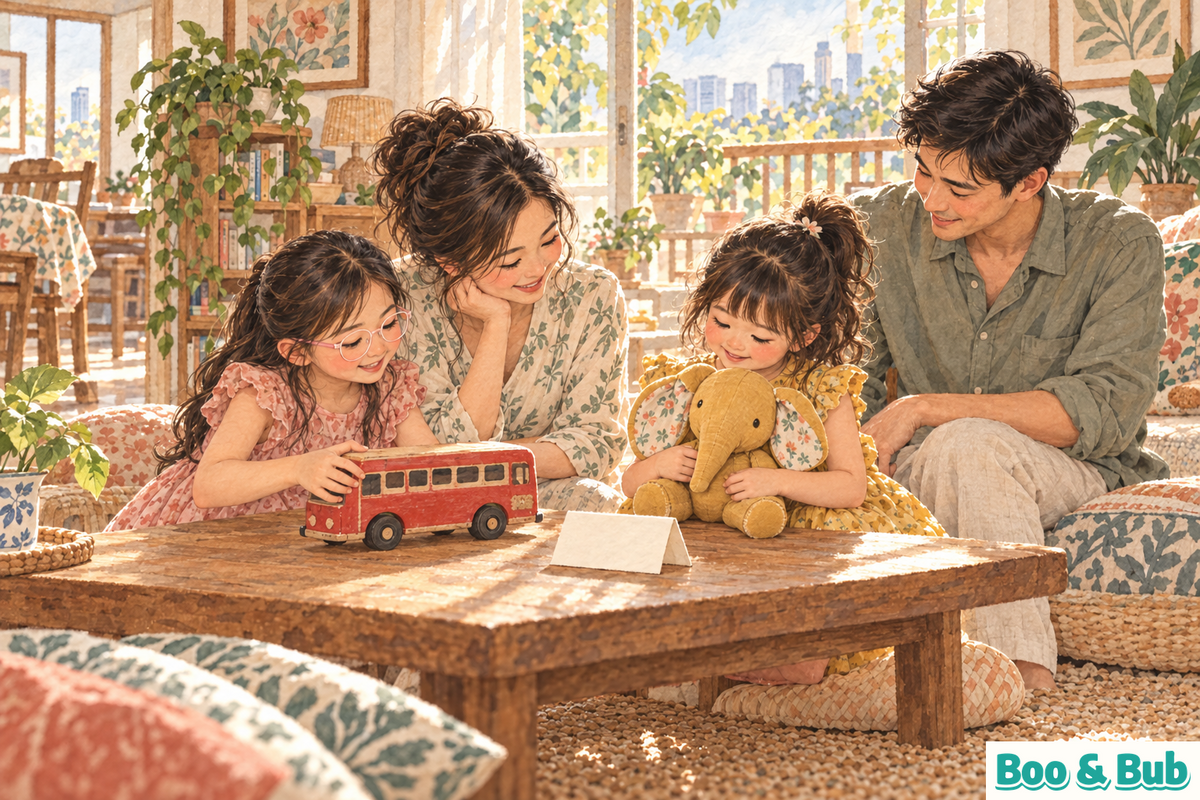
A soft toy and a wooden bus might look like ordinary things waiting to be put away. Give them a small space on the table, and there is a different invitation: what would your child want a visitor to know about them?
A home museum can be a quiet weekend activity in a Malaysian flat, without a shopping trip or a room to spare. This version uses a couple of familiar objects and an adult's company. Keep the baby away from the display, and choose objects appropriate for the children taking part.
Start with a choice, not a collection hunt
The National Museum of Australia's Curious curators activity asks children to consider which objects they would choose and what stories those objects might tell. Its full project is a box display. Here, borrow the question and keep the setup much smaller.
Let your child choose what matters. Offer two familiar toys, or ask them to bring something they already enjoy. There is no need to search the whole house. Leave fragile keepsakes and anything belonging to someone else where they are unless that person agrees.
If one child chooses a toy because it is red and another remembers who gave it to them, both are starting points. You do not need to replace their reason with a more impressive one.
An ordinary object can be worth a closer look.
Give each object a little space
Museon-Omniversum's mini-museum guide suggests choosing a place at home and adding information cards about the objects. For this small version, clear one stable tabletop area and put the toys directly on it. Skip raised stands and glass covers.
A picture can be the label. Fold a piece of paper beside each object. Your child might draw the bus or dictate a short sentence for you to write. Ask what they want the card to say before picking up the pen.

Visit as someone who is curious
Sit beside the display and let your child decide where the visit begins. Ask one question, then wait. You could ask which object they would show first. Follow their answer instead of testing names, colours or counting.
If they only point, you can look together. If the bus leaves its spot and joins a pretend journey, the museum can become play. There is no finished arrangement to protect.
The visit can follow your child's interest.
Let the museum close
Agree when the table is needed again. Put the toys back together afterwards. You can keep a label if your child wants it, without saving the whole display.
For an older child who wants to continue, the V&A's object-based storytelling activity offers another direction: use familiar things as starting points for an invented story. Its full activity is designed for ages seven and up.

What ordinary thing would your child put in a little museum? Share the idea with the Boo & Bub community.
Sources: National Museum of Australia: Curious curators; Museon-Omniversum: Make a mini-museum; V&A: Design and make your own story.