




Parent notes
One fold changes the bridge
By Carrie 5 min read
A sheet of paper and two book stacks make room for a small test: what changes when the paper is folded?
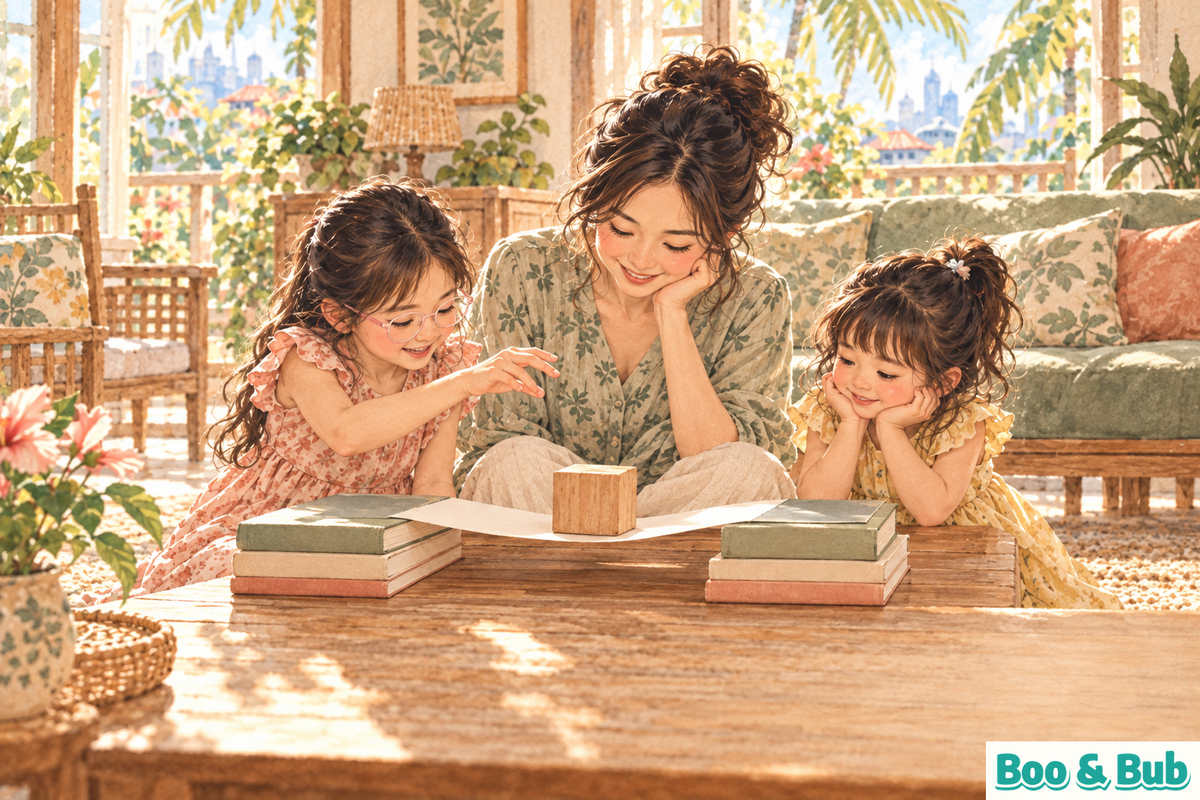
A sheet of paper stretches between two piles of books. It looks like a bridge, until a wooden block makes the middle dip. That small bend is an invitation to look again. What could you change without adding more paper?
For a quiet afternoon at home in Malaysia, a paper bridge needs little space. Keep it a shared tabletop activity, with an adult beside your child. Leave the baby out of the work area, and choose materials suited to the child taking part.
Let the first bridge bend
PBS KIDS suggests starting with two equal-height book stacks and a flat sheet across the gap. Put the stacks on a firm surface, with enough paper resting on each side. Start with a small gap. There is no need to build a tall structure.
The Australian National University activity includes blocks as possible test weights. Choose a large, lightweight play block rather than coins or other small loose objects for this version. Let your child predict what might happen, then gently place it near the middle and take hands away.
If the paper bends, describe what you can see: the middle moved down; the ends stayed on the books. You do not need to announce that the bridge failed.
A bend gives you something to notice.
Change the paper's shape
Remove the block before rebuilding. ANU suggests making accordion folds, with the ridges running from one support towards the other. Fold together if the creases are tricky. Your child can hold one edge while you help with the next fold.
Keep the book stacks where they were. Place the folded paper across the same gap and try the same block again. This leaves one clear question to explore: what changed when the paper changed shape?

Talk about what you see
Science Buddies explains that changing a paper bridge's shape can make it resist bending more. That does not promise a particular result from every sheet. Look before adding another block. Does the middle dip less? Did an end slide? A slipped support is worth noticing too.
Let your child suggest the next change. Perhaps the gap should be shorter, or the folds wider. Try one idea, without turning the activity into a competition over whose bridge holds more.
Keep one thing the same to see what changed.
Stop with a question still open
You can leave the next test for another day. A quick drawing of the two shapes can be enough to keep the idea. Put the books back together when you finish.

What small change surprised your child? Share the moment with the Boo & Bub community.
Sources: PBS KIDS: Build and Test Paper Bridges; ANU: Paper Bridge Challenge; Science Buddies: Build the Best Paper Bridge.