




Parent notes
A shadow worth stopping for
By Carrie 5 min read
A patch of light, a rough outline and one moving shape make a small invitation to explore shadows together.
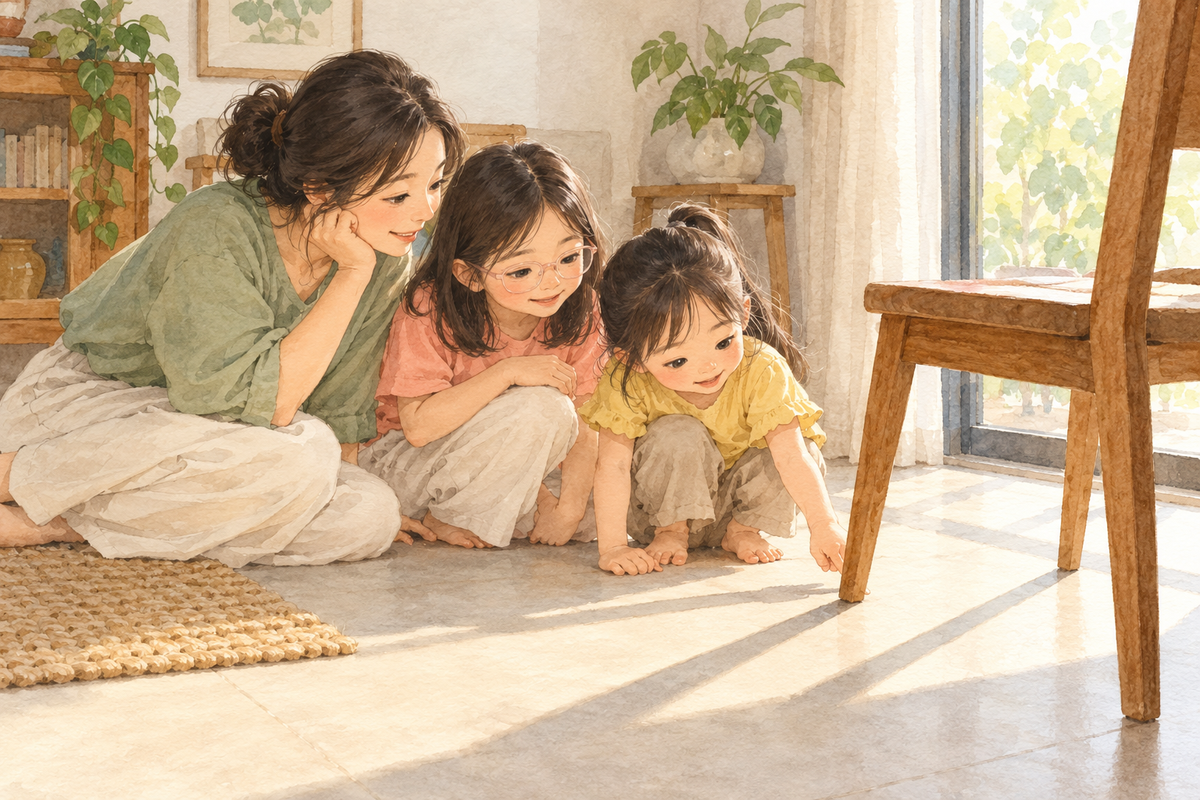
The chair has not moved, but something beside it looks different. A long shape stretches across the floor, with thin lines where its legs should be. Before you move on to the next job, invite your child to take a closer look.
For a Malaysian family spending an afternoon indoors, a patch of light near a window can be enough to begin. If the light is too soft to make a clear shadow, save the window idea for another time. There is no activity to rescue.
Start with what they notice
Look together before explaining. Ask, "What do you think made that shape?" Give your child time to point or try an idea. You can follow their attention instead of turning the moment into questions they need to get right.
NAEYC suggests exploring familiar shadows near a window or outdoors. A chair is a useful starting point because your child can look between the object and the shape beside it. Notice an edge together. Does every part look the same?
One ordinary shadow is enough to begin.
Leave a small record
For a tabletop variation, lay a sheet of paper where daylight falls. Hold your hand between the light and the paper while your child follows part of its shadow with a pencil. Take turns if they want. NAEYC includes indoor hand-shadow tracing among its family ideas.
The outline does not need to be neat. Look at the mark after the hand moves away. Your child might describe what they saw, or simply enjoy making another shape. Keep the page if it interests them; a finished picture is not required.

Change one thing
For another short session, use a torch aimed at a blank wall, away from faces. Put one simple cardboard shape between the torch and the wall. PBS explains this setup as an object blocking some of the light that would otherwise reach the wall.
Keep the torch still and move the shape. With the wall and torch unchanged, compare the shadow when the shape is nearer the torch and when it is nearer the wall. PBS's activity shows a larger shadow nearer the torch and a smaller one nearer the wall. Try it rather than asking your child to memorise the rule.
Change one thing, then take another look.
Follow their next idea
Your child may turn the shape into a character and invent a short story. Or they may switch the torch off and be done. Stop while it still feels like play. There is no need to add a worksheet.

What ordinary shadow caught your child's attention? Share the small discovery with the Boo & Bub community.
Sources: NAEYC: Exploring Shadows; PBS KIDS for Parents: Put on a Shadow Play.