





Parent notes
Before you share their photo
By Carrie 5 min read
A short pause before sharing a child's photo can make room for their answer and a more thoughtful choice.
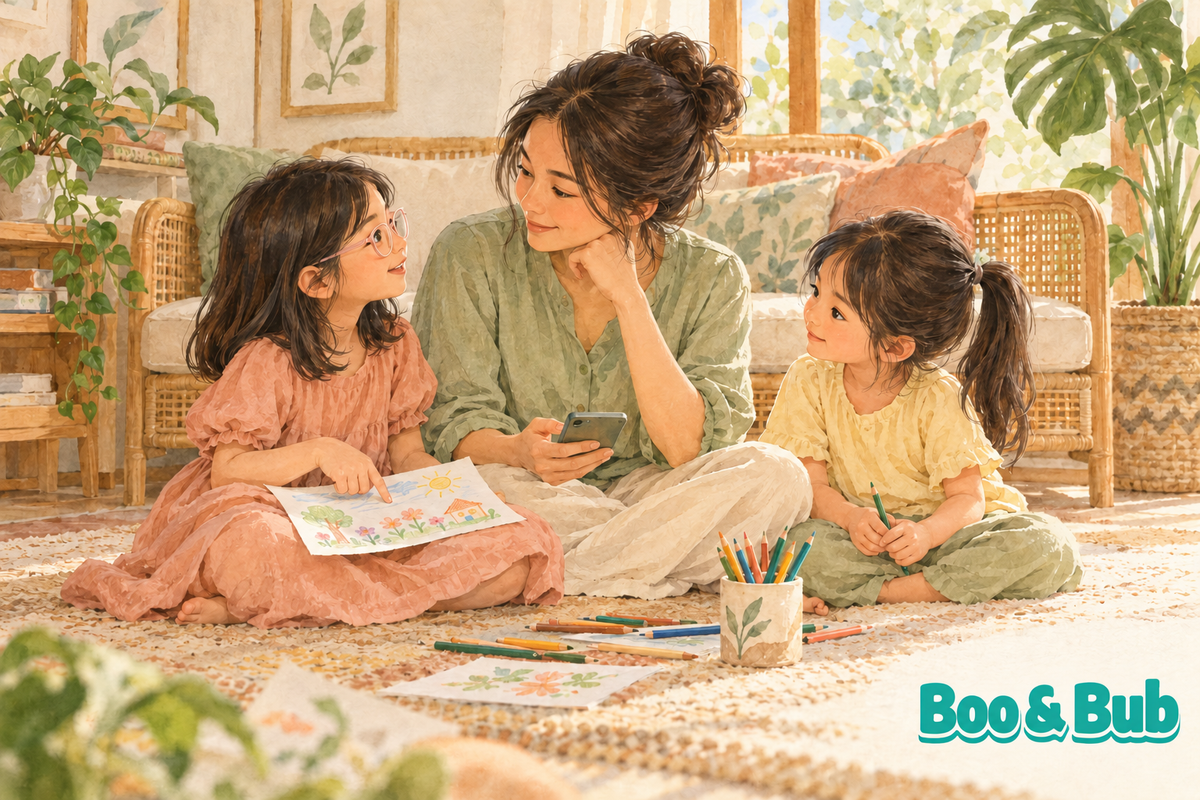
A funny face at breakfast. A proud smile beside a drawing. Family moments can feel ready to send before anyone has asked the child in the picture. A short pause gives you time to decide whether that moment needs an audience at all.
For Malaysian families keeping relatives updated across different homes or countries, sharing can feel like part of staying close. You can keep that connection while being more careful about what leaves your phone.
Separate taking from sharing
A photo and a post are different choices. Explain what you want to do before lifting the camera. Later, if you want to send the image, explain who would see it. Agreement to a family photo does not automatically mean agreement to a public post.
You might say, "Can I take a picture of you with your drawing?" Then ask separately, "Would you like me to send it to Grandma?" These are example questions, not a script your child has to answer positively.
Ask about the audience, not only the camera.
Let their answer change your plan
eSafety encourages parents to explain their reason for taking and sharing a photo, involve the child and respect a refusal. Make "no" an answer you can accept. Put the phone down rather than bargaining for one more smile.
If your child hesitates, leave the photo unsent. A younger child may enjoy looking at a picture without understanding what sharing means. UNICEF notes that young children cannot give informed consent about online sharing. Their enthusiasm does not remove your responsibility to protect their privacy.

Look beyond the smiling face
Before sharing, check the rest of the frame and the words you plan to add. Leave identifying details out. A school badge or a caption naming a regular location can reveal more than intended. Avoid posting embarrassing or intimate moments, even when adults find them amusing.
Choose the smallest appropriate audience. A direct family message is still something another person can copy or forward, as eSafety reminds parents. Privacy settings help you limit access; they cannot promise control after sharing. Include other children only after checking with their parents, too.
A moment can matter without becoming a post.
Keep some memories at home
Your child might prefer a photograph of the drawing alone. Or you could keep a print in a family album and enjoy showing it together. Keeping it private is a complete choice.

Tell relatives your preference before the next gathering: ask before sharing pictures of the children. A small, clear agreement is easier to follow than guessing. What photo-sharing boundary works in your home? Share the idea, without anyone's private details, with the Boo & Bub community.
Sources: UNICEF: What you need to know about sharenting; eSafety Commissioner: Privacy and your child.