




Parent notes
Borrow it, then bring it back
By Carrie 5 min read
A small borrowing agreement gives children a clear request, a finishing point and a place to bring the item back.
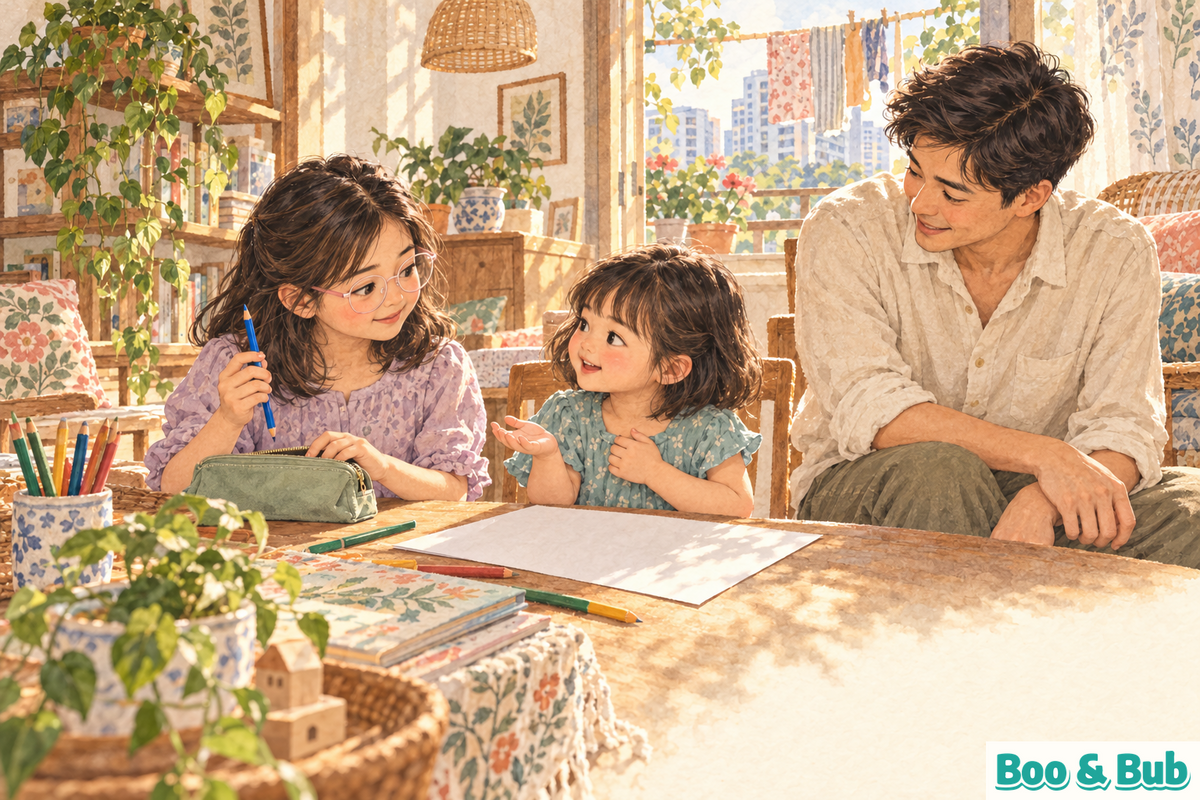
A pencil comes out of someone else's case. A book travels from one room to another. Borrowing can look like a tiny household moment, until its owner starts looking for what has gone.
For a child beginning to borrow things, make the arrangement small and visible. An everyday object, with an adult nearby, gives you a simple place to practise asking and bringing it back.
Make the request clear
Begin with something its owner is comfortable lending. Your child might ask, "Can I use your blue pencil for this picture?" Help them wait for an answer before picking it up. A request can be spoken in whichever language your family uses.
You can show the same habit with your child's belongings. Ask before using their special pencil, and accept their answer. If the owner says no, help your child find another option rather than asking repeatedly until the answer changes.
A borrowing request includes space for the other person to answer.
Agree on a small ending
"Later" can leave everyone with a different idea. Try a visible finishing point: the pencil comes back when this cloud is coloured in, or the book returns after this story. Say what will happen next before the item changes hands.
Keep the first arrangement short enough for you to help with it. This is easier to follow at home than a vague promise made while everyone is rushing out to school.

Check what "borrow" means in this moment, too. A sheet of paper given for a drawing can be kept; a borrowed pencil belongs to its owner and comes back. You do not need to turn the difference into a quiz.
Finish with the return
When the agreed moment arrives, go together to return it to its owner. A pencil left on another table may still be missing to the person who lent it. Help your child hand it back or put it in the place you agreed.

The return is part of borrowing, so make time to help it happen.
If something is forgotten, start with finding it together. "Where did we use it last?" is a useful opening. If it is damaged, help your child explain what happened and work out the next step with the owner.
Notice the completed return. You might say, "You brought the pencil back to her case." Next time, the same small arrangement can be practised again, with your help where needed. Which ordinary item could your family start with?
Sources: CFPB: sharing and borrowing, Jingle Dancer parent guide, page 10; PBS KIDS for Parents: helping children with sharing.