




Parent notes
How long is a book?
By Carrie 5 min read
A book and a row of blocks make a small invitation to compare lengths and try a different measuring piece.
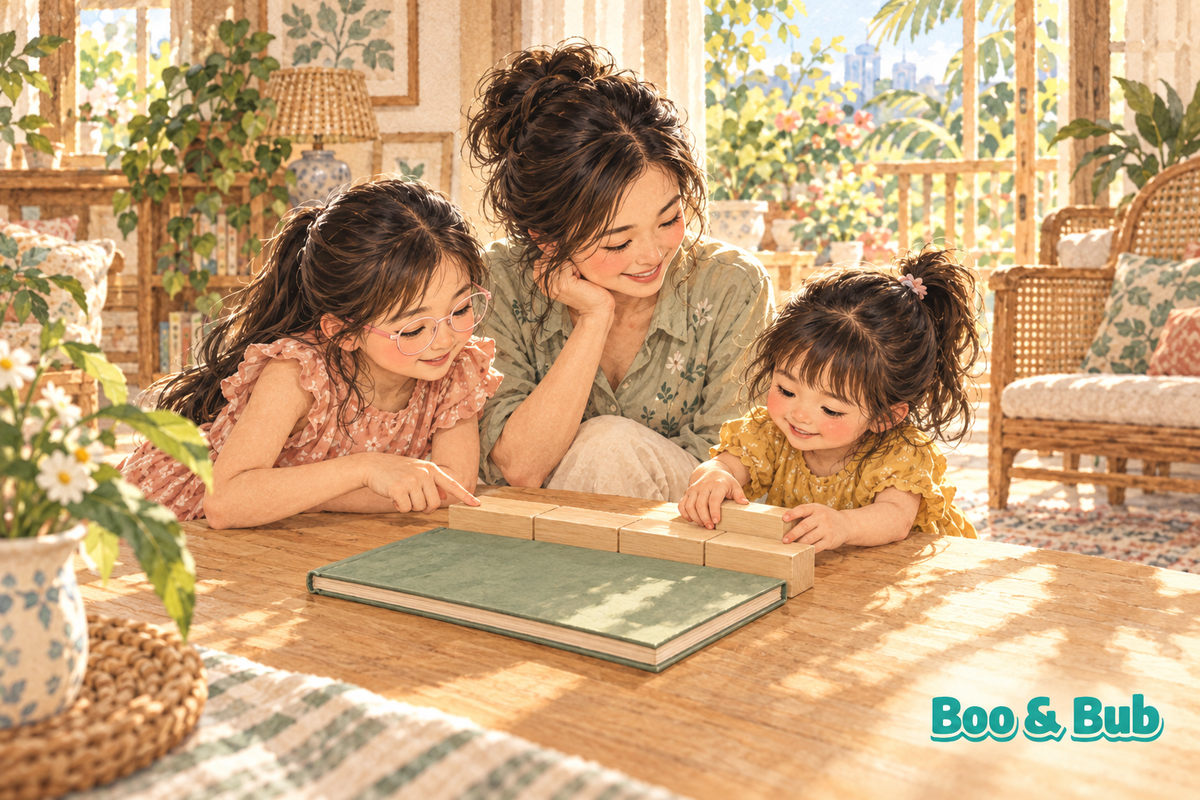
A picture book can be more than something to read. Put it beside a row of wooden blocks and a new question appears: how long is it? You can explore that question at a low table, without preparing a worksheet or turning an afternoon into a lesson.
Choose a closed book and some large, equal-sized blocks already used for play. Sit together and let your child move the pieces. This is an invitation to look closely, with room for a wrong guess and another try.
Begin with what they can see
Place two books side by side, with their bottom edges lined up. Ask which looks longer. Your child might point, put one book over the other or describe the covers instead. Follow what they notice before bringing the conversation back to length.
Compare before you count. PBS KIDS for Parents suggests using everyday words such as long and short when exploring measurement with younger children. A child who is happy comparing two objects does not need to move straight to numbers.
Start with something your child can compare, then give the numbers a job.
Make a row beside the book
Choose one book. Put the first block beside its starting edge, then place the next block touching it. Continue along the same side. Keep the measuring pieces the same size. Turn each block the same way, too.
Let your child check for spaces or overlaps. You could ask, "Is there room for another block here?" Count together if they want to. If the last block goes past the book, say that the book is a little shorter than the full row. An approximate answer is fine.

Change the piece, not the book
NAEYC suggests using familiar objects, including blocks, to measure things at home. Once your child has explored one row, try larger blocks beside the same book. Keep each new row consistent.
A different unit can change the count. Longer pieces usually mean fewer pieces across the same length. Put the rows beside each other and ask what changed. The book did not grow or shrink. Your measuring piece changed.

The count means more when you say what you measured with.
Stop while the question is still theirs
Your child may want to measure a second book, or turn the blocks into a train. Leave the next move open. There is no need to record every answer or finish a set of objects.
Next time, an ordinary question such as "Will this book fit on that shelf?" gives measuring a reason. What has your child decided to measure at home? Share the small discoveries with the Boo & Bub community.
Sources: PBS KIDS for Parents: Measure Up!; NAEYC: Math and Literacy—The Perfect Pair.