

Parent notes
Keeping your home language part of everyday life
By Carrie 5 min read
A gentle starting point for Malaysian families who want children to keep hearing and using their home language.

In a Malaysian home, the language used for schoolwork may be different from the one used with grandparents. A child might understand a family conversation yet answer in English. That can leave parents wondering whether their home language is slowly slipping away.
As a Hong Kong mum living in Malaysia, I care about the connection a family language can hold. There is room to keep that connection warm without making every conversation another lesson.
Start with a moment you already share
Choose one ordinary part of the day when you can speak comfortably in your home language. It could be getting dressed or chatting while you unpack groceries. Keep the conversation familiar, so your child can follow what is happening even when some words are new.
For example, you might name a mango, then ask whether your child wants a slice. The words have a purpose. You are talking together rather than asking them to recite a list.
Give the language a place in everyday life, with someone your child enjoys talking to.
Let their answer count
When your child replies in another language, listen to the meaning first. You can answer naturally in your home language and add a little more detail. If they point to a picture of a cat, you might describe what the cat is doing.
Raising Children Network recommends pausing so children have a turn to respond, and building on what they say. A conversation needs room for both voices. Avoid turning each sentence into a correction or making them repeat it before you continue.
Use the things they already enjoy
A favourite song can make a useful starting point. Sing it together while tidying up, or choose a picture book about something your child likes. You can talk about the pictures even if you do not read every printed word.
StartingBlocks, run by Australia's early-childhood education authority, suggests reading and singing in family languages and being patient when children mix languages. You do not need a perfect performance. A short exchange that your child willingly joins is a practical place to begin.
Keep the invitation gentle enough that your child wants to answer again tomorrow.
Make room for family conversation
If a grandparent speaks the language, suggest a small shared activity instead of a request to demonstrate vocabulary. Looking through a recipe or naming fruit at the table gives everyone something to talk about.
Choose a routine your household can keep. There is no need to copy another family's language rules. Adults can agree on a manageable starting point and leave room for change as school routines change.
This week, choose one familiar moment and keep it easy. Which language feels like home to your family? You can share that story in the Boo & Bub community.
Sources and visual reference
- Raising Children Network: raising bilingual children
- Raising Children Network: everyday language development
- StartingBlocks: raising a multilingual child
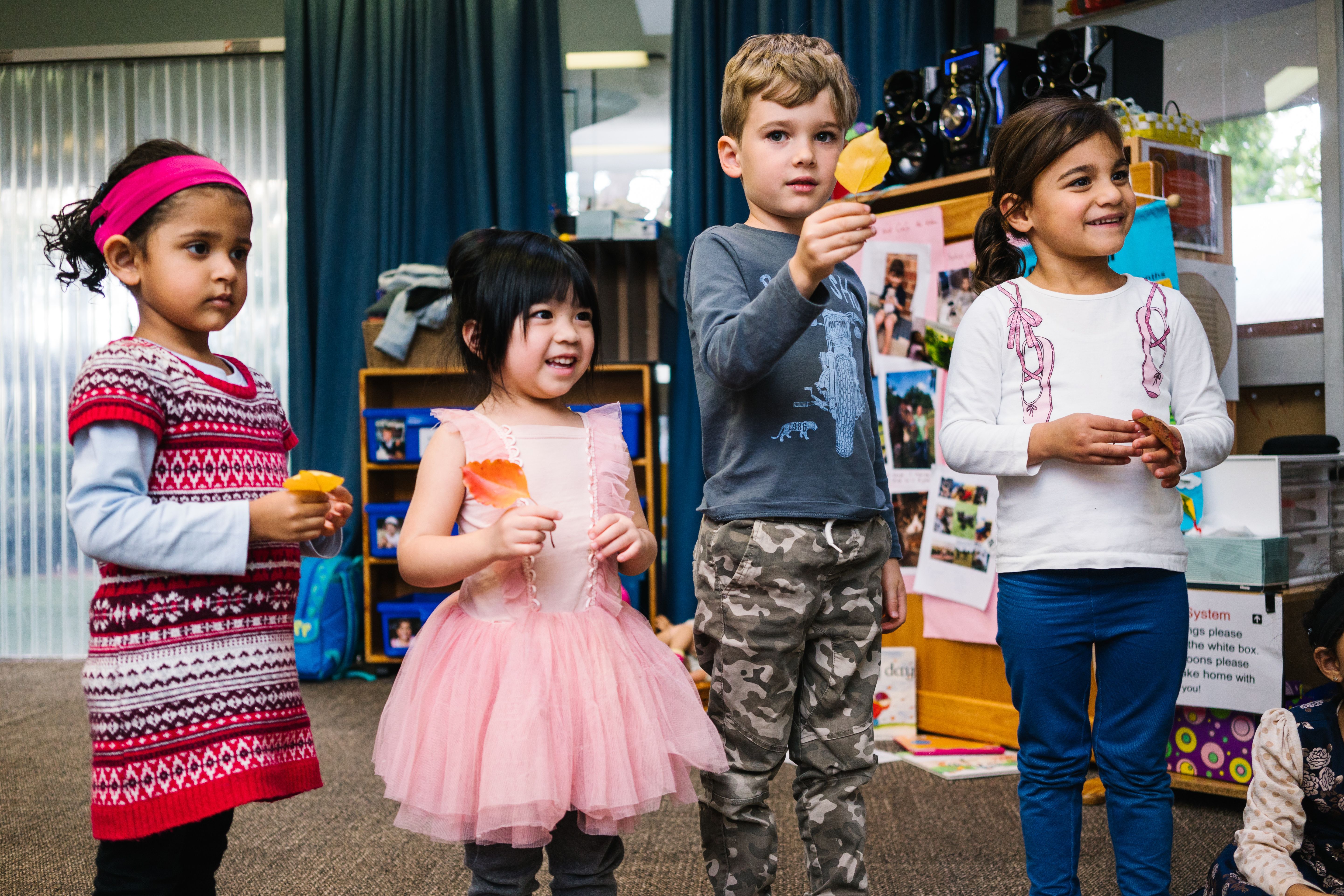
- Visual reference: StartingBlocks language-play photograph, used for activity inspiration only. The published illustration is newly generated artwork.